There's a reason most decks around Hickory are wood. It's affordable, it's easy to work with, and a freshly stained wood deck looks great against a backyard full of trees. In a town with deep roots in furniture making, plenty of people simply prefer the feel of real wood.
The catch is upkeep. Wood needs regular attention here, and it's better to know that going in.
Wood deck building in Hickory
Wood decks are the most common choice across Hickory and nearby towns. Most use pressure-treated pine, which is treated to resist rot and insects and is the standard deck lumber in this part of North Carolina. You can also ask about other wood options if you want a different look, and how cost and upkeep change.
A wood deck project usually includes footings, framing, decking, railings and stairs, all in treated lumber, plus the permit and inspections.
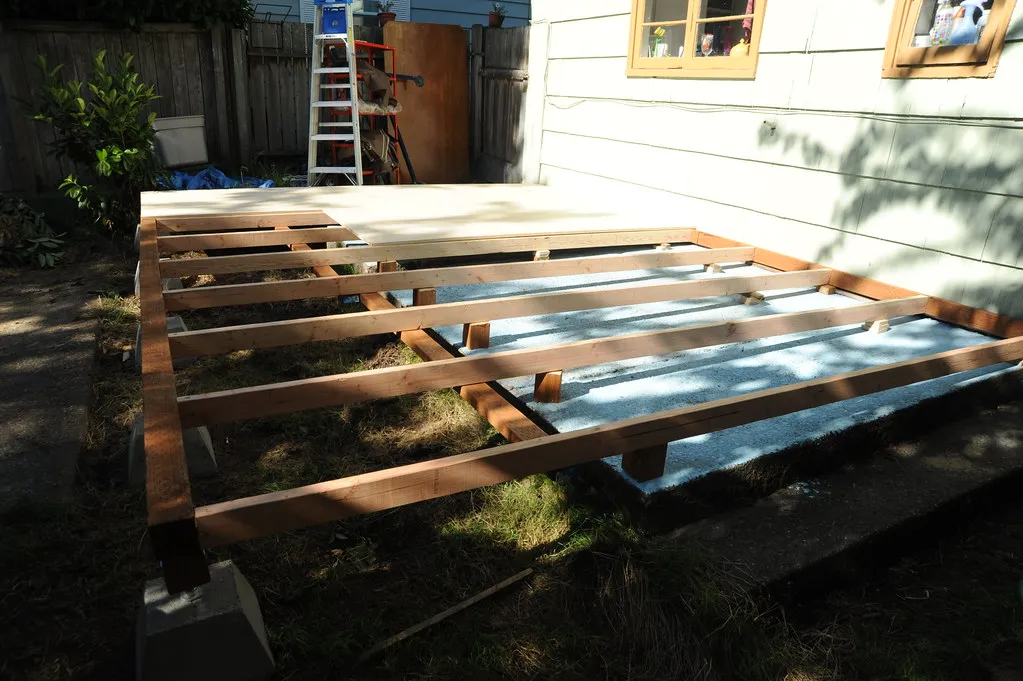
Why people choose wood
- Lower upfront cost. Pressure-treated decking costs noticeably less than composite for the same size deck.
- Natural look. Wood grain and stain colors that feel right on a traditional home.
- Easy to change. You can restain a different color later, or replace a single board without hunting for a matching product.
- Cooler underfoot than many darker composite boards in direct sun.
The upkeep, honestly
Hickory's hot, humid summers and wet stretches are hard on wood. Here's what to expect:
- New treated lumber needs time to dry before it takes stain well. That can be weeks to a few months.
- Clean and stain or seal every two to three years, sooner on decks in full sun.
- Some cracking and checking is normal as the wood dries and weathers.
- Shaded areas grow mildew and need cleaning more often.
- Boards can cup or twist over time, and a few may need replacing down the road.
If that routine sounds fine, wood is a great value. If it sounds like a chore you'll skip, look at composite decks instead. An unstained wood deck in our climate will gray out, split and age faster.
How a wood deck should be built to last
A wood deck's lifespan has a lot to do with how it's put together:
- Treated lumber rated for ground contact where posts and low framing need it
- Hangers and screws rated for treated lumber, so they don't corrode early
- Proper gaps between boards for drainage and airflow
- Flashing at the ledger so water can't soak the house rim
- Footings that keep posts off the dirt
Small choices like screws instead of nails for the decking, and sealing cut ends, help boards stay put and last longer.
Stain colors and finishes
Clear and lightly tinted sealers show off the grain but need redoing more often. Semi-transparent stains add color and a bit more protection. Solid stains hide the grain and last longer between coats, but they can peel on horizontal boards. Talk through what fits your deck and how much upkeep you want at the estimate.
Signs your wood deck needs more than stain
If you already have a wood deck, watch for:
- Soft spots when you press a screwdriver into the wood
- Boards that flex or bounce
- Gray, fuzzy fibers that won't clean up
- Loose railing posts
Those point toward deck repair, not just a fresh coat.
What it costs
Pressure-treated wood is the lowest-cost way to build a solid deck around here. Size, height, railing style and stairs move the number. Raised or multi-level decks cost more. The real price comes from a free on-site estimate and a written quote. Our deck prices page explains what moves the cost.
What to ask about a wood deck quote
- Is the framing rated for ground contact where it needs to be?
- What fasteners are you using for the decking?
- Will you stain it, and if not, when should I?
- What railing style is included?
Questions people ask
How soon can I stain a new pressure-treated deck?
It depends on how wet the lumber is. Often it's a few weeks to a few months. A simple test is to sprinkle water on the boards. If it soaks in, it's usually ready. If it beads, give it more time.
How long does a wood deck last in Hickory?
A well-built, well-maintained pressure-treated deck can last many years. Decks that never get cleaned or sealed, or that were framed without good drainage, wear out much sooner.
Is wood cheaper than composite over time?
Up front, yes. Over many years, the cost of cleaning and staining narrows the gap. If you do your own staining, wood usually stays cheaper overall.
Can I switch my wood deck to composite later?
Sometimes. If the frame is sound and spaced right for composite boards, you can re-deck. Otherwise the frame may need work first.