A deck facing west over a Hickory backyard, or out toward Lake Hickory, gets beautiful evening light. It also gets a long stretch of hard sun before that, when the boards are hot, the table umbrella keeps blowing over and nobody wants to sit out there. A pergola or other shade structure fixes that without closing in the view the way a full roof can.
Start with where the sun hits
Before picking a style, it helps to know when you want shade and where the sun is at that hour. A good builder will stand on your deck and look at this with you.
- Morning shade on an east-facing deck is rarely the problem. Morning sun is pleasant most of the year.
- Midday sun comes from high overhead. Almost any pergola helps with it.
- Late afternoon sun comes in low from the west. A pergola alone may not block it, because the sun is shining under the rafters instead of through them. A shade panel or screen on the west side, or a deeper overhang, does more.
Rafter direction matters too. Running rafters roughly east to west blocks more of the high midday sun. Tighter rafter spacing or a layer of slats on top gives denser shade at the cost of a heavier look.
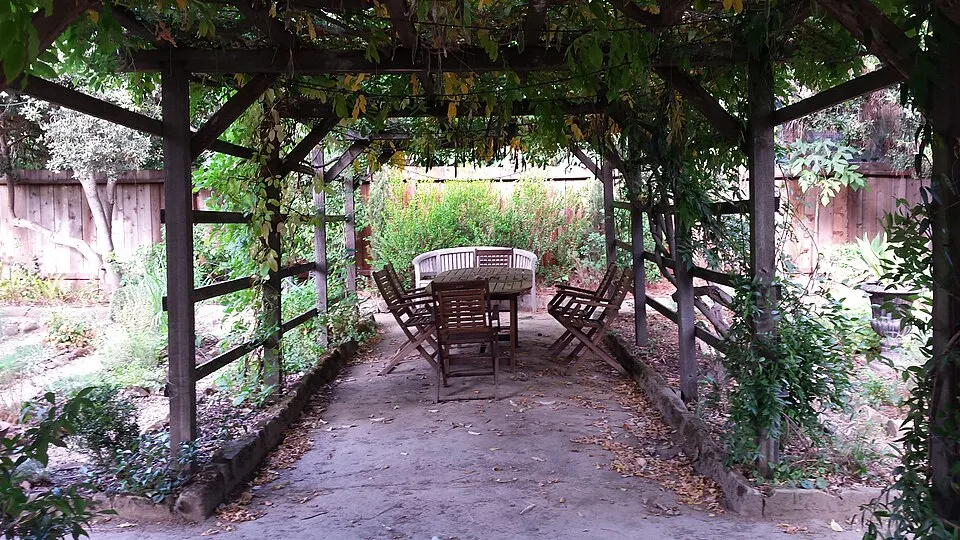
The options, from open to covered
Open pergola
Posts, beams and rafters with open sky between. It gives filtered, moving shade, frames the space and costs the least. Rain goes straight through. Good if you mostly want to break up the sun and give the deck some structure.
Pergola with a cover
An open pergola can be topped with shade cloth, a retractable fabric canopy or clear polycarbonate panels. Shade cloth and canopies add shade. Clear panels keep off light rain while letting light through, though they collect pollen and leaves and need regular cleaning. All of these add some weight and wind load, so the pergola needs to be built for them.
Louvered roof
Usually an aluminum system with roof blades that tilt open for sun and close tight to shed rain into a gutter along the beam. Some are manual, some motorized. It's the most expensive pergola option and the closest thing to a roof that still opens up. Motorized systems need a circuit, which means an electrician.
Solid roof
If what you really want is full shade and staying dry, that's a roofed structure, and a covered deck or porch may be the better fit.
Wood or aluminum
Hickory has a long history of working with wood, and a well-built wood pergola with shaped rafter tails can look like it came with the house. Pressure-treated pine is the most affordable. Cedar costs more, is lighter and twists less. Both need stain or paint to hold their color in our hot, humid summers, and big pine beams tend to check and twist as they dry.
Aluminum doesn't rot, warp or need staining. The look is cleaner and more modern. It costs more up front and saves the upkeep later.
Wind on open lake lots
Lake lots and hilltop yards around Hickory catch more wind than a fenced backyard in town. A pergola is a tall frame with a lot of leverage, and once you add a canopy or panels, it can act a little like a sail.
What keeps it steady:
- Posts that run to real footings, not posts set on surface brackets on top of a patio
- Bracing at the post tops so the frame can't rack
- Connections and hardware sized for the cover you plan to add
- Retractable canopies that you actually retract when storms come through
Pergolas on raised and multi-level decks
Hickory has a lot of decks a full story up on sloped lots, and pergolas on those need extra care. A pergola post can't just sit on the deck boards. It needs to tie into framing built to hold it or run down to its own footing, and on a tall deck that can mean a long post or added blocking and beams underneath.
On multi-level decks, a pergola over the upper level can shade a dining area while the lower level stays open to the sun. Or the opposite: an open upper deck with a shaded lounge area below. If you're planning a new deck, mention shade at the estimate so post locations get planned with the frame. Our deck building page talks about planning a deck around how you'll use it.
Permits and price
Some pergolas need a permit and some don't, depending on size, height and whether they attach to the house or a deck. The contractor checks and pulls the permit when required. NC811 is called before footings are dug.
Size, material, height off the ground, the number of footings and any cover or louvered system set the price. See our deck prices page for how to read a written quote. The builder works in Hickory, Conover, Newton and Long View.
Questions people ask
Does a pergola really make a difference in the heat?
Yes, during the middle of the day. Late in the afternoon the sun comes in low and can get under an open pergola, so a west-side shade panel or cover helps on west-facing decks. A builder can show you where the shade will fall at different times.
Can I add shade cloth or a canopy later?
Usually, if the pergola was built for it. Covers add weight and catch wind, so tell the builder up front if you might add one. That way the posts, bracing and connections are sized for it.
Is a louvered pergola worth the cost?
It is if you want one space that works for sun and rain. It costs more than an open pergola and less than many full roof projects. If you only want shade, a wood or aluminum pergola with a canopy is the less expensive route.
Can I put a pergola on a deck that's a full story up?
Yes, but the posts need solid support from the deck framing or their own footings. The builder checks the frame first. On an older tall deck, a structural check comes before anything gets added on top.