If you've stained a wood deck in August heat, you already understand the appeal of composite. You wash it, maybe twice a year, and that's about it. No sanding, no sealing, no splinters in bare feet.
That convenience isn't free, and composite isn't perfect. Here's what you should know before deciding.
Composite decking in Hickory
Composite boards are made from a mix of wood fibers and plastic, usually with a protective outer shell called a cap. Brands like Trex or TimberTech are common examples, and there are several others at different price points. The board sits on a framing system that is still usually pressure-treated lumber.
Composite decks are a strong fit around Hickory for homeowners who want a deck that still looks good years from now without a yearly upkeep routine. It's a popular choice for lake homes near Lake Hickory, where a deck may get a lot of use and the owners would rather be on the water than holding a stain brush.
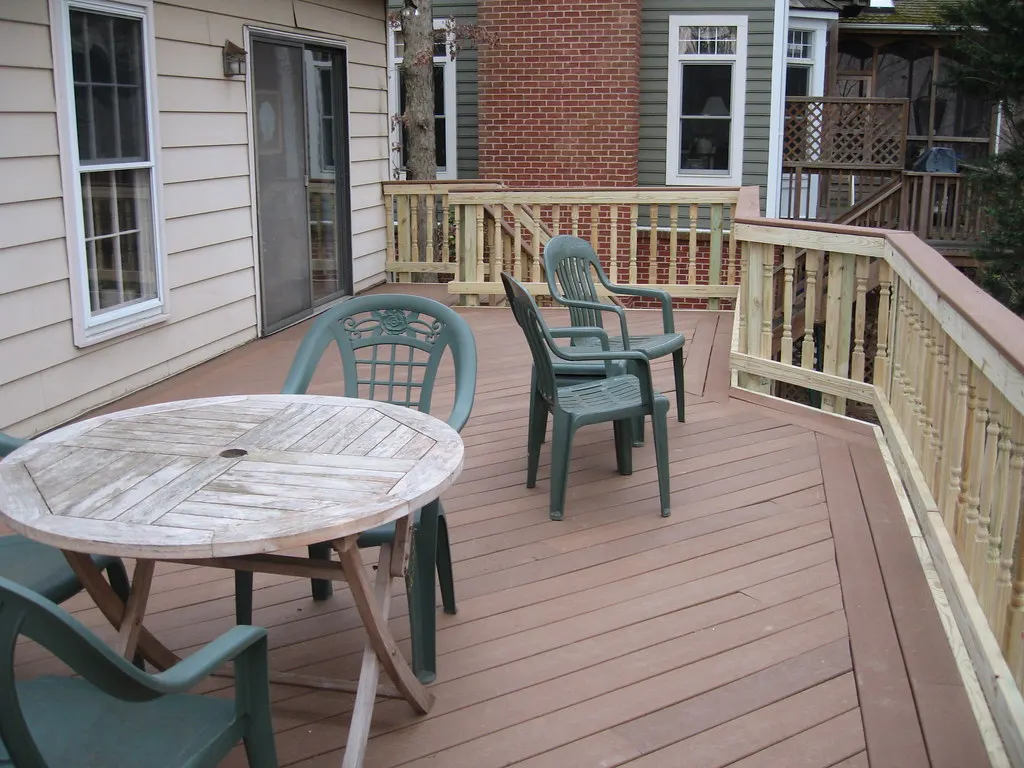
Is composite right for you?
Composite tends to fit if you:
- Want to stop staining and sealing for good
- Plan to stay in the home for a while
- Have kids or pets and hate splinters
- Like a consistent, finished color
- Have a shaded yard where wood tends to grow mildew
Wood might fit better if you:
- Want the lowest cost now
- Don't mind regular upkeep
- Love the look and feel of real wood
- Are building a smaller or temporary deck
The honest downsides
Composite gets oversold. A few things to know:
- It costs more. Expect a noticeably higher upfront price than the same deck in pressure-treated pine.
- It gets hot. Darker boards in full afternoon sun can be uncomfortable barefoot in a Hickory summer. Lighter colors help.
- It's not maintenance-free. Pollen, leaves and dirt still collect. Shaded spots can still get some mildew on the surface, which washes off.
- Framing still matters. Composite boards often outlast the wood under them if the frame isn't built and protected well.
How composite decks are built differently
Composite isn't just a swap of one board for another. It changes some framing details:
- Joists are often spaced closer than for wood, especially on angled decking.
- Many builders use hidden fasteners that clip into grooved board edges, so you don't see screw heads.
- Boards expand and contract with temperature, so gaps at ends and edges need to follow the manufacturer's instructions.
- Joist tape on top of the framing is often added to help shed water and protect the wood underneath.
Getting these details right is what keeps a composite deck flat and tidy over time.
Composite near the lake
Lake homes get a lot of foot traffic, wet feet and towels dropped on the boards. Composite handles that well because it doesn't soak up water the way bare wood does. Good airflow under the deck still matters, especially on lower decks close to damp ground, so the framing underneath can dry out between rains.
Colors, railings and finishing touches
Composite comes in a wide range of colors, from light grays to deep browns, and many boards have a wood-grain texture. Railing options include matching composite, aluminum, or cable and glass for a cleaner look toward a view. Picture-frame borders around the edge give a finished look and hide cut board ends.
What it costs
Composite costs more up front than wood, and the product line matters too. Premium boards, complex shapes, fancy railings and raised or multi-level decks all push the price higher. Your actual number comes from a free on-site visit and a written quote. See our deck prices page for what moves the cost.
Comparing options
If you're torn, ask the builder to price the same deck both ways. Seeing the real gap between composite and wood decks for your exact size usually makes the choice easier. If you want to add a roof, look at covered decks and porches.
Questions people ask
How long does a composite deck last?
Good composite boards often last decades with basic cleaning. The bigger question is the framing underneath, which is why flashing, joist protection and footings matter so much.
Can you put composite boards on my existing deck frame?
Sometimes. If the frame is solid and the joist spacing works for composite, re-decking can save money. If the framing is tired or spaced too wide, it usually makes sense to rebuild the frame too. The builder checks this during the free estimate.
Does composite get slippery?
Most capped composite has a textured surface that handles water reasonably well. Like any deck, it can get slick with wet leaves, pollen or mildew, so keeping it clean helps.
How do I clean a composite deck?
Usually soap, water and a soft brush, a couple of times a year. Check the board maker's care guide before using a pressure washer or strong cleaners.