Ask Hickory homeowners why they stopped using the deck after supper and you'll hear the same answer. Mosquitoes. Gnats right at dusk. Yellow jackets around the grill in August. A screened porch keeps the evening outside without the bugs, and in our humid summers that's what makes the back of the house livable from May to October.
The roof side of a screened porch, things like gable versus shed and how it ties into the house, is covered on our covered decks and porches page. This page is about the screened part: the walls, the doors, the floor and the details that decide whether a screened porch actually keeps bugs out.
Screen choices
Not all screen is the same, and the right one depends on how you use the porch.
- Standard fiberglass screen is the most common. It's affordable, doesn't dent and is easy to replace.
- Aluminum screen is a little stiffer and can last longer, but it dents if bumped.
- Pet-resistant screen is heavier and holds up to dogs and cats pushing on it. It's darker and a bit harder to see through, so many people use it only on the lower part of the walls.
- Finer mesh blocks the smallest biting insects, at the cost of a little airflow.
- Solar screen cuts glare and heat on a west-facing wall. It's darker and reduces the view.
On a lake lot, standard screen on the view side and heavier or solar screen on the hot side is a common mix.
How the walls are built
Framing and screen systems
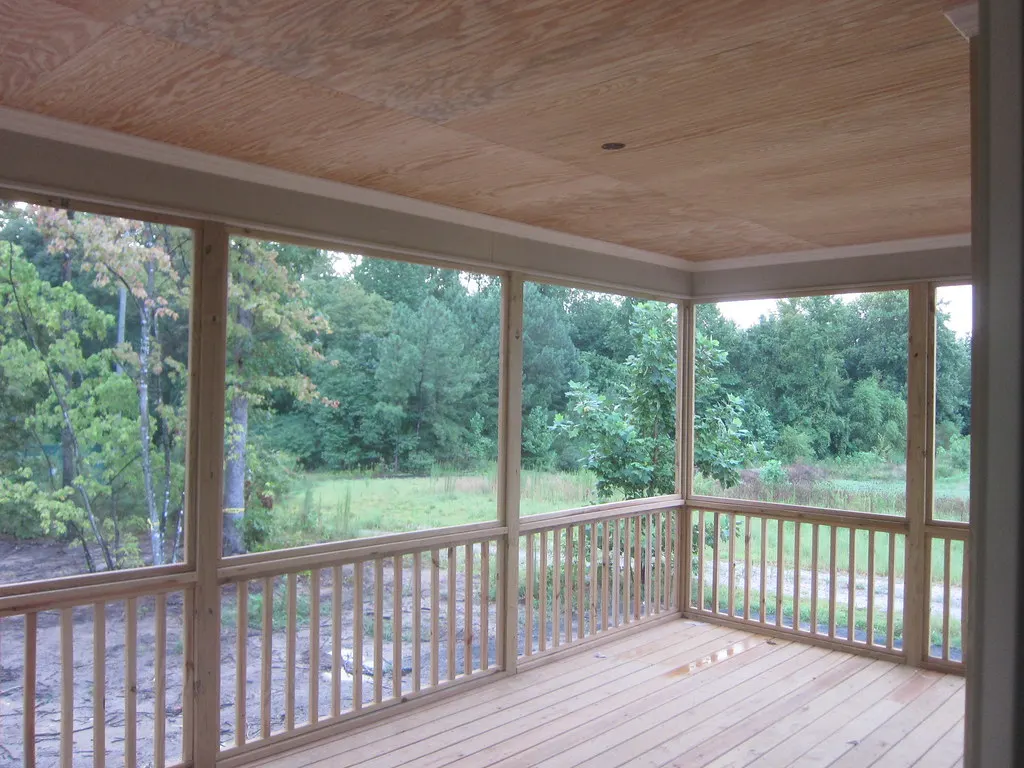
Screen can be stapled to the framing and covered with trim, or held in a track system that lets you pop a panel out and replace it without tearing off trim. Track systems cost more up front and make repairs much easier.
Wall openings should be sized so the screen isn't stretched over a huge span. Big panels sag and flap in the wind. A mid-rail or a few extra posts keep them tight.
Kneewall or full height
A full-height screen gives the most air and the widest view.
A kneewall puts a short solid wall or a band of railing at the bottom. It protects the screen from feet, chair legs and pets, and makes the porch feel more like a room. A kick plate along the bottom of each panel is a lighter-weight way to get the same protection.
Doors
The screen door gets used more than anything else on the porch. A sturdy door with a closer and a solid latch makes a real difference. Ask where it will swing, whether you want a second door to the yard, and whether it lines up with the stairs.
The floor: where bugs get in
Here's the detail that gets missed most. Deck boards have gaps between them so water drains. On a raised screened porch, those gaps are an open door for bugs coming up from below.
The usual fixes:
- Screen stretched under the joists before the decking goes down, which keeps the floor draining but blocks bugs
- Tighter board spacing with composite decking, within what the manufacturer allows
- A closed-in underside with a drainage plan, on porches over a patio
A builder who's done a lot of screened porches will bring this up without you asking. Composite decks are a popular floor for screened porches because they're easy to sweep and rinse.
Screened porches on tall decks and lake lots
Hickory's sloped lots make for some of the best screened porches around. A porch off the main floor, a full story up, looking out over the trees or toward the water.
They take more planning. Posts get taller, the frame needs bracing, and the screened walls catch wind on an open slope. Stairs down to the yard need a landing that works with the screen door. On multi-level decks, a screened upper porch with an open lower deck for the grill is a layout a lot of lake homes use.
Another option on walk-out lots is a screened room under a raised deck. It's shaded and cool, but the deck above lets water through the board gaps. An under-deck drainage system or a ceiling that sheds water to a gutter is what makes that space usable.
Thinking ahead
If you might want glass someday, say so at the estimate. Framing that allows you to swap screens for window panels later can turn the porch into a three-season room without starting over.
Screened porches usually need a permit and inspections in Hickory and Catawba County, and the contractor pulls the permit. For what sets the price, see our deck prices page. The builder covers Hickory, Conover, Newton and Granite Falls.
Questions people ask
How do I keep bugs from coming up through the porch floor?
The common fix is screen installed under the joists before the decking goes on. Tighter board spacing with composite or a closed-in underside with drainage also works. Ask the builder which they recommend for your porch.
What screen is best if I have dogs?
Pet-resistant screen holds up to pushing and scratching much better than standard fiberglass. Many people use it on the lower panels only and standard screen above, which keeps the view clear.
Can a screened porch be converted to a three-season room later?
Yes, especially if it's planned for. Wall openings sized for standard window panels and a frame strong enough for the added weight make the change much simpler.
How often does porch screen need replacing?
Good screen lasts many years, but tears from pets, kids and chairs happen. A track system lets you replace one panel at a time without removing trim, which makes small repairs quick.